Mood Change Walk
Yiwei Lu
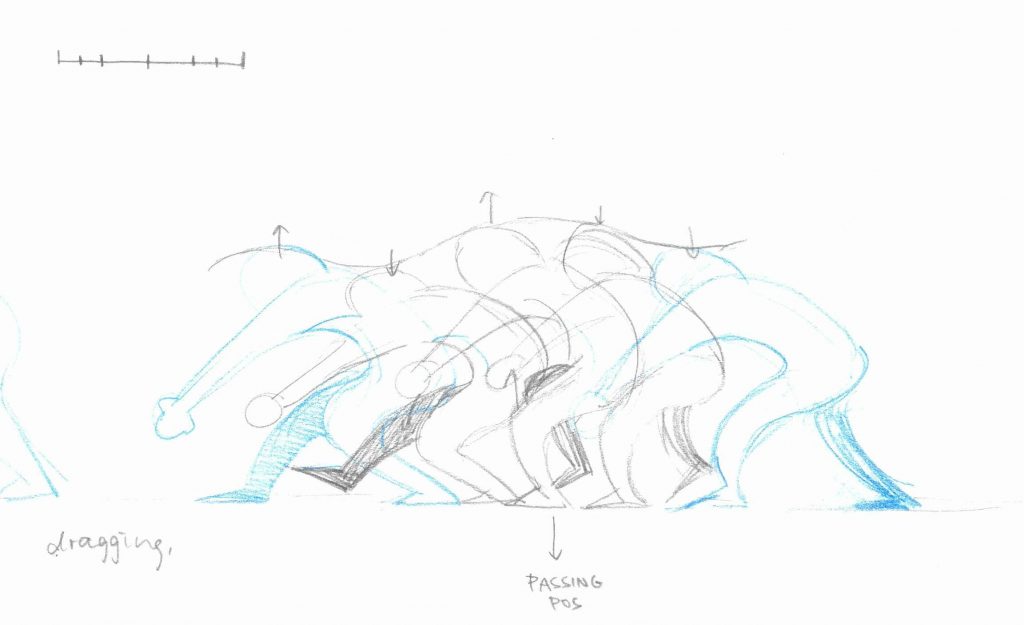
In my ‘mood change walk’ practice, the character’s mood transformed from tired to relaxed. Initially, I depicted a figure was carrying a heavy load, but as I developed the idea, I shifted to that a murderer was dragging a body. Through feedback from the formative assessment and my own reflection, I understood more about my strengths and lacks.
Learnings from Research
Through practices, I realized live-action videos was an essential learning tool. Instead of directly relying on animation references that had been already analyzed, the records of my own movements, online reference videos and film clips allowed me to observe the motion by myself. Through every observation, now I can break movements down better than the past.

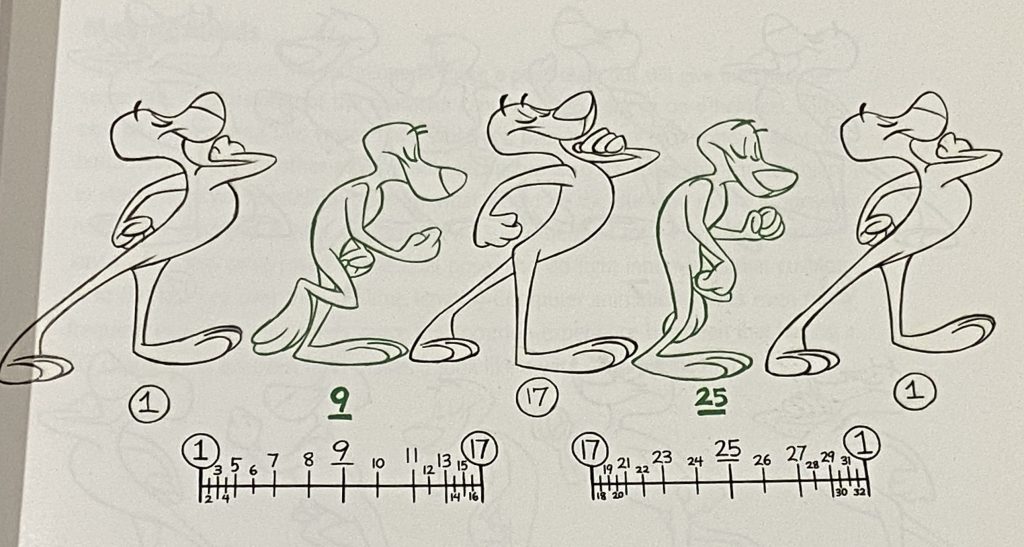
However, live-action movement had limit to present the exaggeration. ‘Character Animation Crash Course’ by Goldberg analyzed the attitude pose in animation walk very well. Part of the book presents examples about how characters walk with different emotions, and introduces some tips that breaking real-world motion rules can somehow improve the animated movement. I really got many fresh ideas. Instead of reflecting the live-action walk which spends more frames in ‘passing pose’, Goldberg suggested (2008), “More frames cushioning into and out of the attitudes, it shows you audience the ‘intent’ of the walk.” Inspired by it, I experimented pace with different timings, which shows how timing can build various emotions in animation.
Learning from Work
From the formative assessment, tutor and my peers suggested me to enhance figure’s reaction by adding exaggerated body language. Based on my previous study on rubber hose animation, I drew figure’s limb a little bit more exaggerated based on the reference. Using this style can make the movement smoother to some extent, and also save my time.
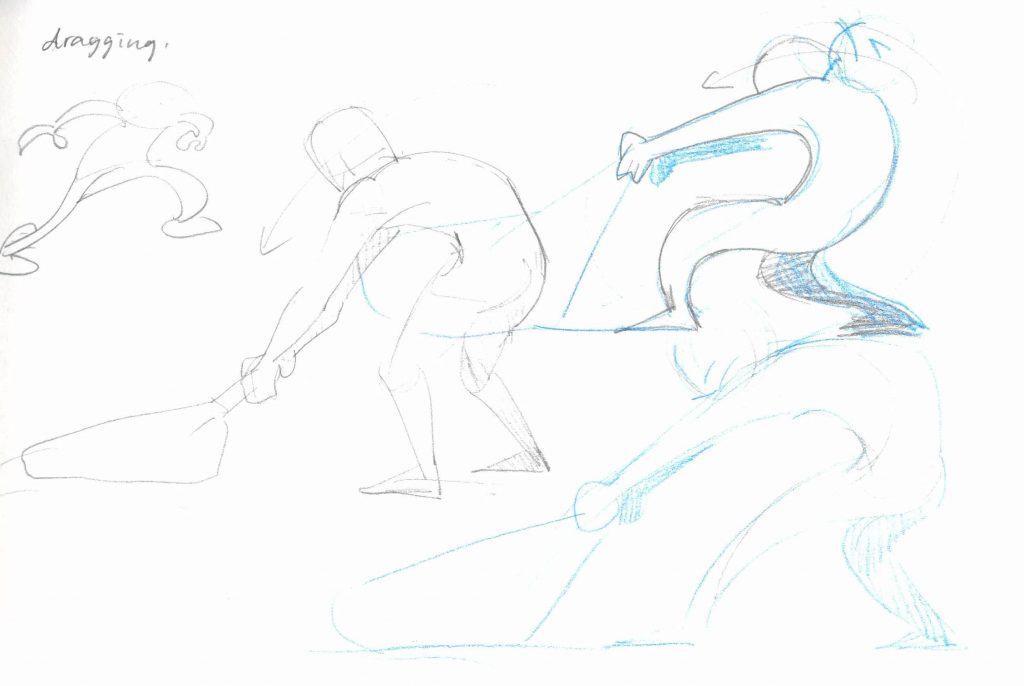
However, I recognized the figure’s mood was still less clear through the action. Although I tried to express emotions through timing and exaggeration, it still lacked the strong visual impression. Maybe I need to build stronger contrast between two moods so audiences can separate clearly.
Another challenge was learning the timing chart. I tried to apply it in this work, which really helped me animate efficiently and clearly. However, sometimes I was still confused.
Through every task, I understood the importance of knowledge, practice and reflection better and better. When I was adjusting my previous work, the improvement of my skills is obvious. Although there are many areas I still need to learn, my current achievement encourages me to face the challenges in my animation journey.
Reference:
Animation References (2020) Dragging/pulling and lifting weighted object – struggle – Animation Reference. 28 January. Available at: https://www.youtube.com/watch?v=6tZSLOdOnuE (Accessed: 1 March 2025).
Goldberg, E. (2018) Character Animation Crash Course! Los Angeles : Silman-James Press.
Rishikesh Jaiswal (2022) Video Reference – Dragging a person. 16 December. Available at: https://www.youtube.com/watch?v=RkPvJIts_Ms (Accessed: 1 March 2025).